The challenge
Scaling from 5 to 50 reps with no account data infrastructure
A CRM built on inbound tailwinds, not structure
n8n is one of the fastest-growing B2B companies in the world, trusted by operators at the forefront of automation and workflow building (including many of Kernel’s other customers). The company has raised $240m, quadrupled its headcount in 2025, and 10x'd its sales team. Previously, the go-to-market motion was almost entirely inbound, riding strong AI market tailwinds and an active open-source community.
But the CRM hadn't kept up
Salesforce had been introduced at n8n in January 2025. The data migration created a wave of duplicates because the previous CRM had stored one opportunity per lead, and each required a corresponding account. On top of that, a billing platform integration had started generating additional duplicates, and reps were creating accounts without checking whether they already existed.
No hierarchies, no territories
As n8n prepared to move from ad-hoc account ownership to a formal territory model, the most basic requirement was missing: there were no corporate hierarchies in Salesforce.
"We have no hierarchies built out at all.”
Anne-Charlotte Chauvet
Head of Revenue Operations
Without hierarchies, the RevOps and Sales team had no way to know which subsidiaries belonged to which parent. Territory assignment was blocked. Expansion opportunities within existing customers were invisible. Inbound routing was unreliable.
AEs were feeling it directly:
"AEs were asking in public channels and Slack about how we are going to resolve the issue with hierarchies in our system. It's a pain being felt across the board."
Jared Pleasants
Revenue Operations
The RevOps team knew how little room they had:
"You could get nine things right, but if you get the tenth thing wrong, the reps don't trust any of it. It's all assumed to be wrong. Throw it out the window."
Jared Pleasants
Revenue Operations
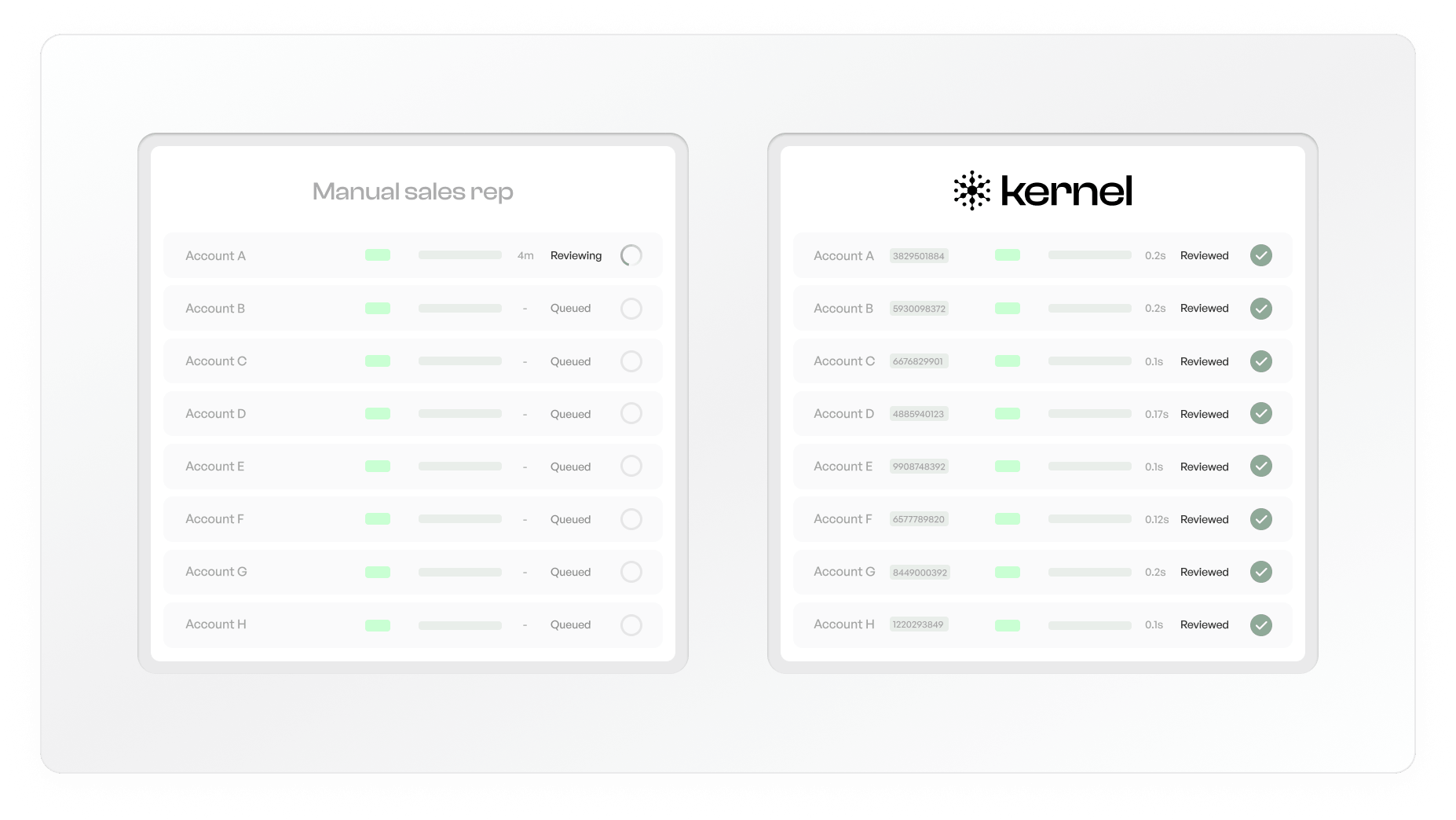
RevOps team freed from manual one-by-one account reviews in favour of structured and scalable processes powered by Kernel
Firmographic data working against the team
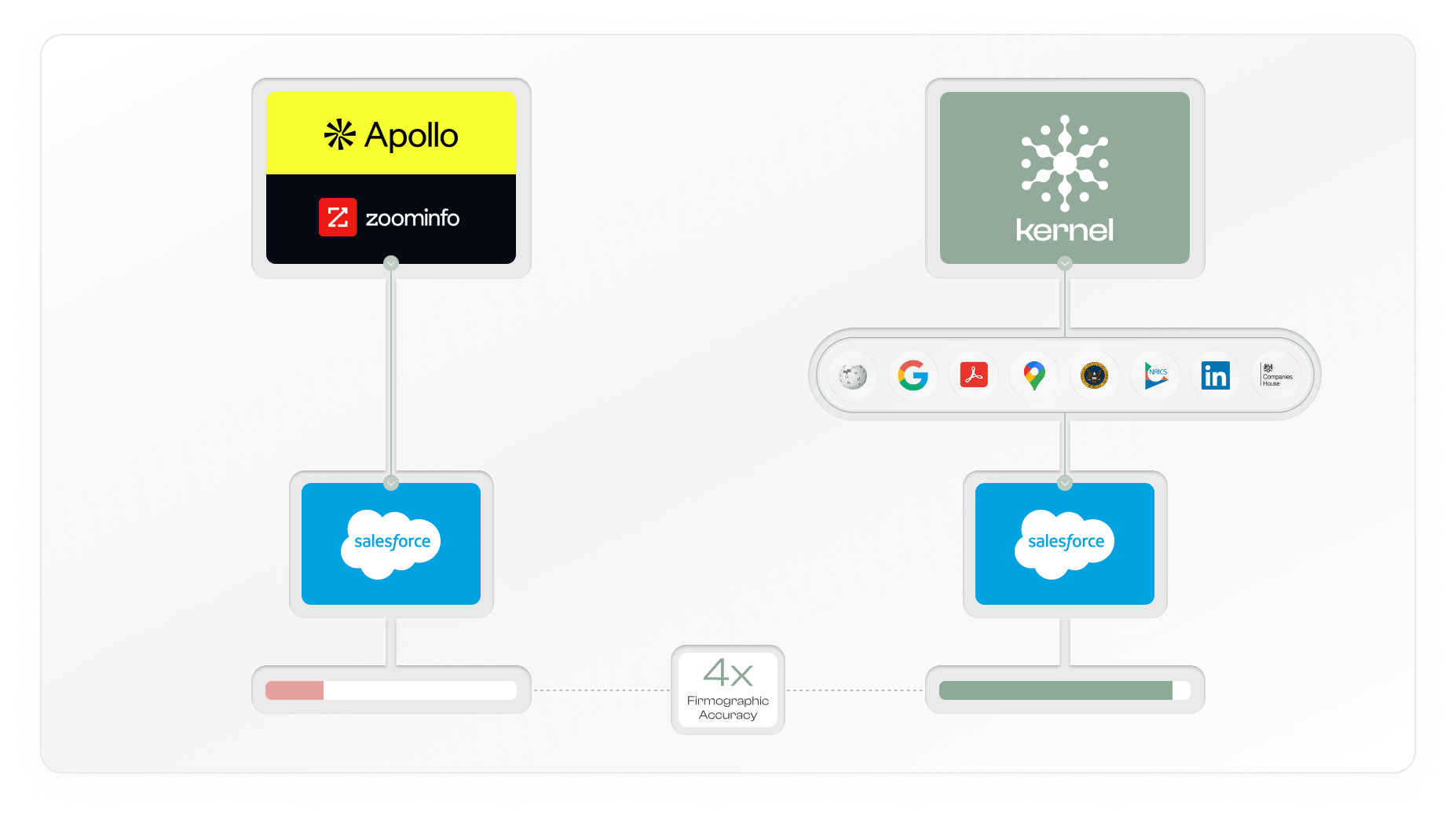
n8n was using Apollo as its firmographic source of truth, but the data was causing real problems. Enterprise accounts were being classified as SMB and routed to the wrong reps because Apollo returned incorrect headcount numbers.
"Apollo told me some big parent account only had 88 employees. And then therefore, it was SMB for us and should be handled by the SMB rep. Whereas this is actually a 10,000 plus employee company."
Jared Pleasants
Revenue Operations
Previous hierarchy tools hadn't delivered
The Head of RevOps had run hierarchy projects before at other companies, using D&B and ZoomInfo. Those experiences informed how cautiously the team approached this challenge:
"D&B and ZoomInfo had started flooding our CRM with hierarchies that were totally wrong."
Anne-Charlotte Chauvet
Head of Revenue Operations
The decision
Proving accuracy across 1,000 accounts
What n8n needed for the success of their GTM motion:
- Hierarchy data that distinguished between holdings, operating parents, and subsidiaries. n8n needed hierarchies that reflected how they actually sell, not just legal structures.
- Firmographic accuracy that could withstand rep scrutiny, with reasoning they could point to for evidence.
- The ability to take mass actions in the CRM (merge, associate, correct) without mistakes that would cost them trust with reps.
The PoC
Kernel ran a proof of concept across 1,000 n8n accounts, a mix of mid-market and enterprise, across EMEA, US, LATAM, and APAC. The sample included strategic customer accounts where n8n wanted to expand their coverage beyond a single business unit.
What Kernel found in the n8n CRM:
- Significant duplicate clusters, including accounts with 30+ copies.
- Accounts with no hierarchy mapping; every account was listed as a parent.
- Accounts misclassified by segment due to entity-level rather than group-level headcount.
- Headcount and revenue discrepancies versus Apollo, particularly for subsidiary entities.
What Kernel returned:
- Full hierarchy mapping with parent-child relationships and hierarchy type classification (holding, operational, regional).
- Headcount and revenue at entity level with reasoning for each figure.
- Duplicate group identification with recommended merge actions.
- Risk scoring to protect accounts with open opportunities from destructive actions in the CRM.
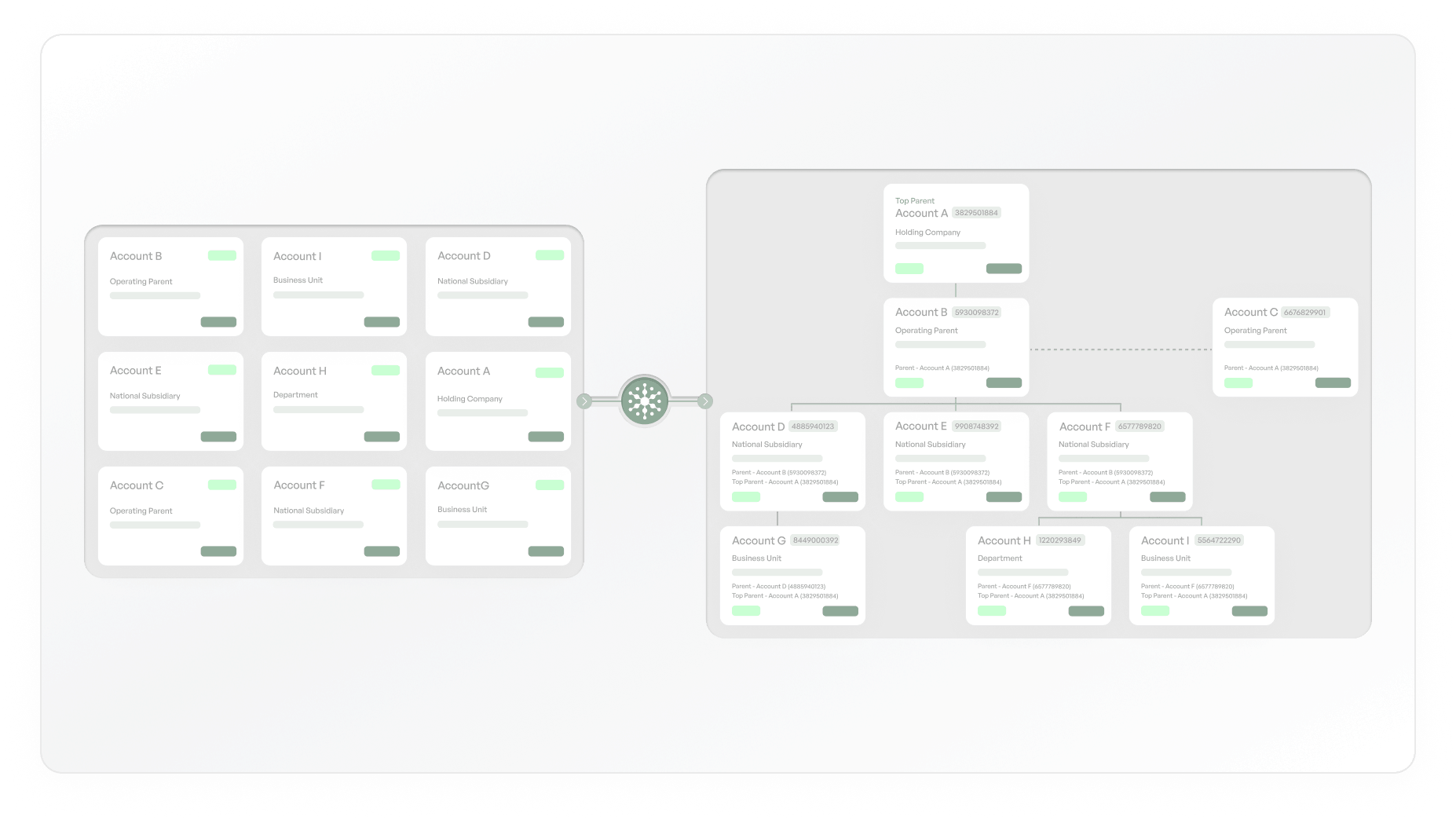
Hierarchies mapped for the full CRM, including top customers and enterprise accounts
After reviewing the PoC:
“This is what we need.”
Anne-Charlotte Chauvet
Head of Revenue Operations
How Kernel works inside n8n today
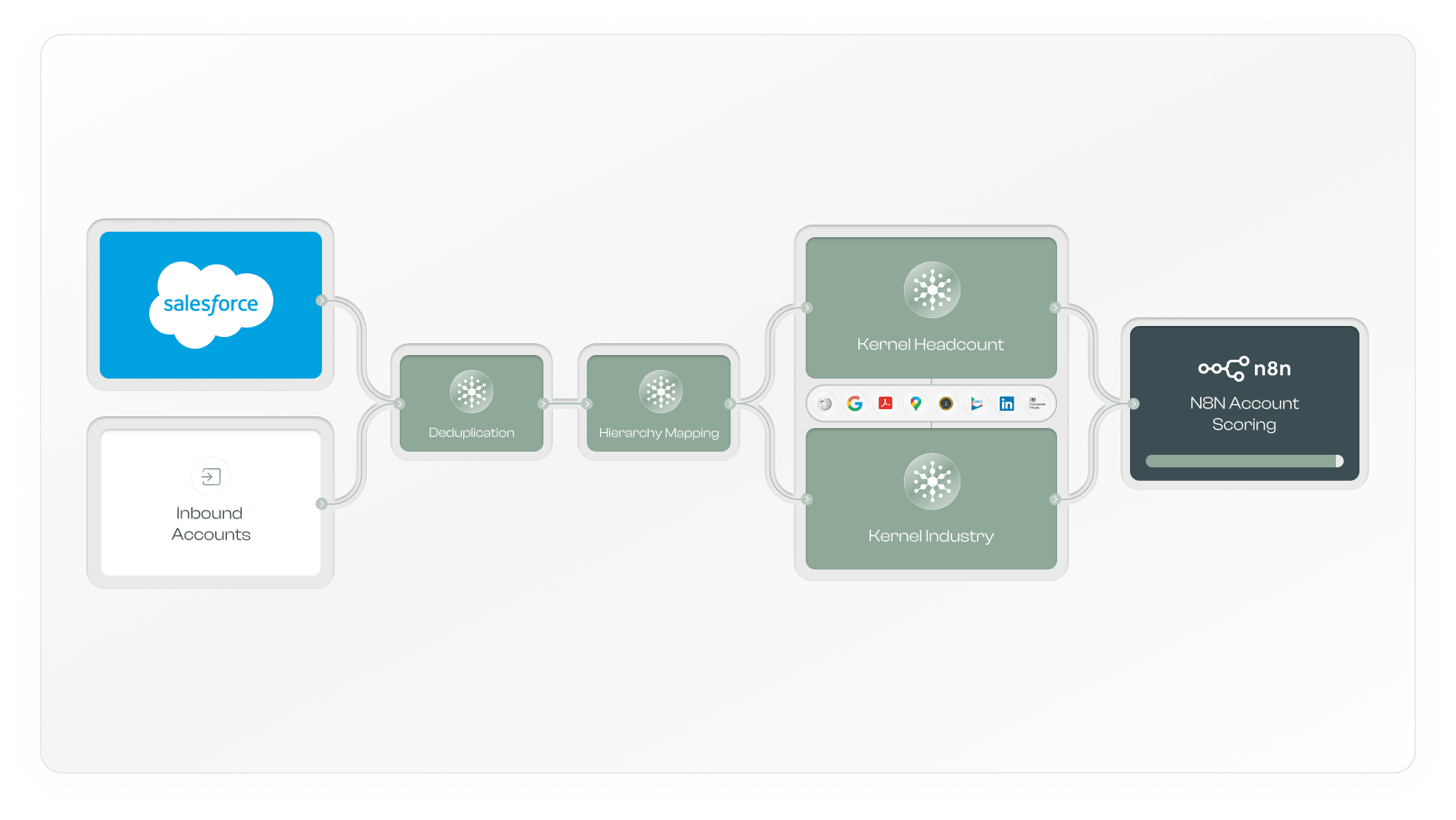
Kernel runs identity resolution across n8n's CRM and matches accounts to the Kernel entity database with a unique KERN ID. Custom fields in Salesforce include hierarchy type, parent account, headcount, revenue, and a cleaning action recommendation. After actioning, all accounts are mapped to their wider hierarchy, with entity-type classifications, and linkages to associated KERN IDs for traceability.
The implementation started with enterprise accounts and existing customers, where hierarchy mapping would open up expansion opportunities. The RevOps team uses the Kernel app to review and execute merge and associate actions. Safeguard rules protect accounts with open opportunities.
n8n has moved Kernel to the center of their data stack. Incumbent tools are being replaced as the enrichment source, and the Kernel API will enrich inbound leads as they're created.
"My preference for our source of truth is Kernel because it's the easiest way. It's a tool that I have under my control. I already trust it and it's super easy to integrate."
Jorge Lopez
Revenue Operations
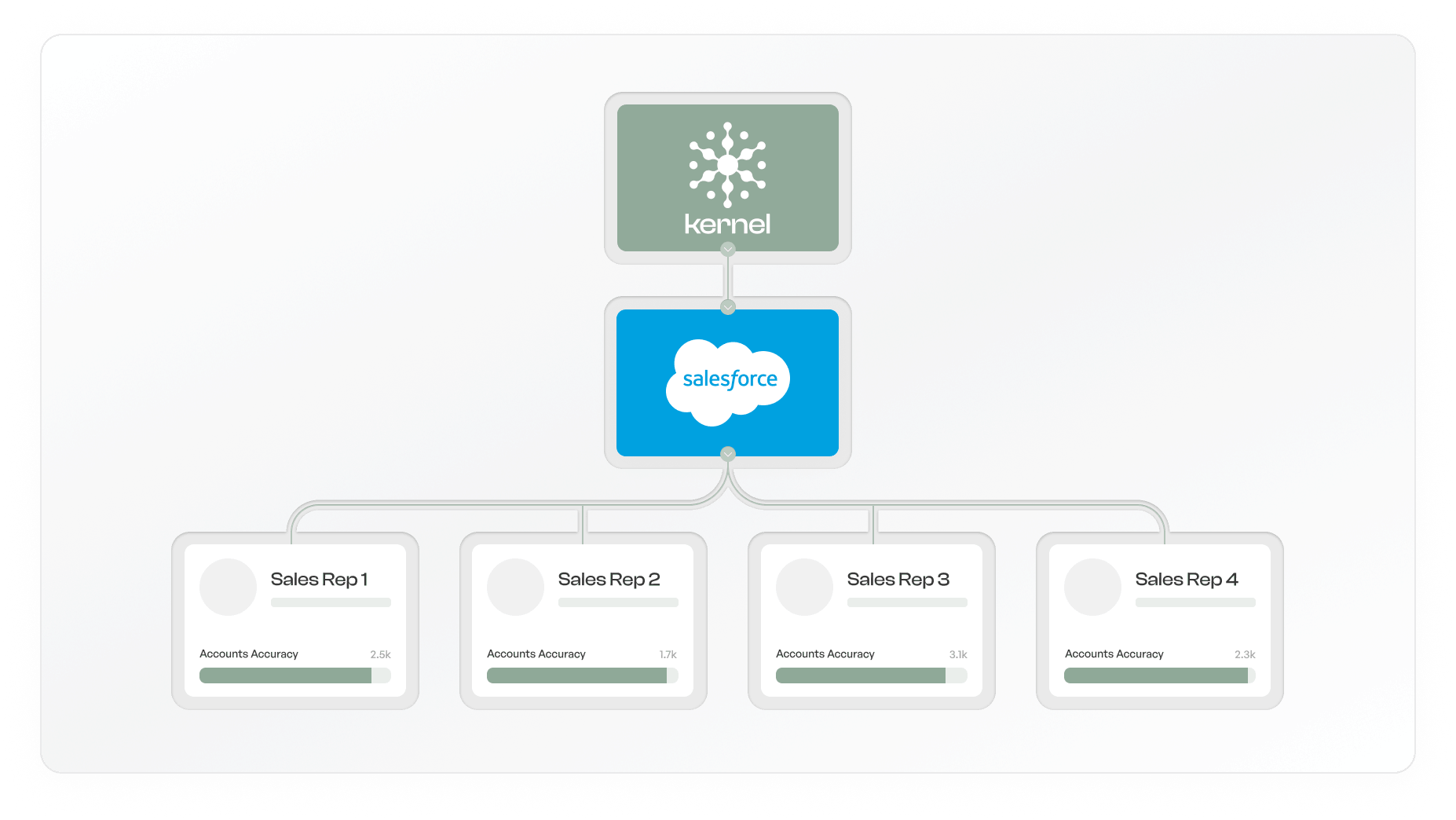
With Kernel hierarchies and firmographics, the n8n RevOps team have confidence that the right accounts go to the right sales reps











.png)
